

Signal intake
Every incoming alert is correlated and culled. Only the signal that is real, reachable, and consequential moves forward.
Clarion is agentic security operations. It runs detection, triage, and investigation across your stack, reaches a verdict on every alert, then finishes the job: contains the host, revokes the access, merges the fix, and records the proof.
Over 90% of alerts are false positive or benign. Two checks run in parallel, the verdict merges them, and the loop closes with a fix, in minutes.
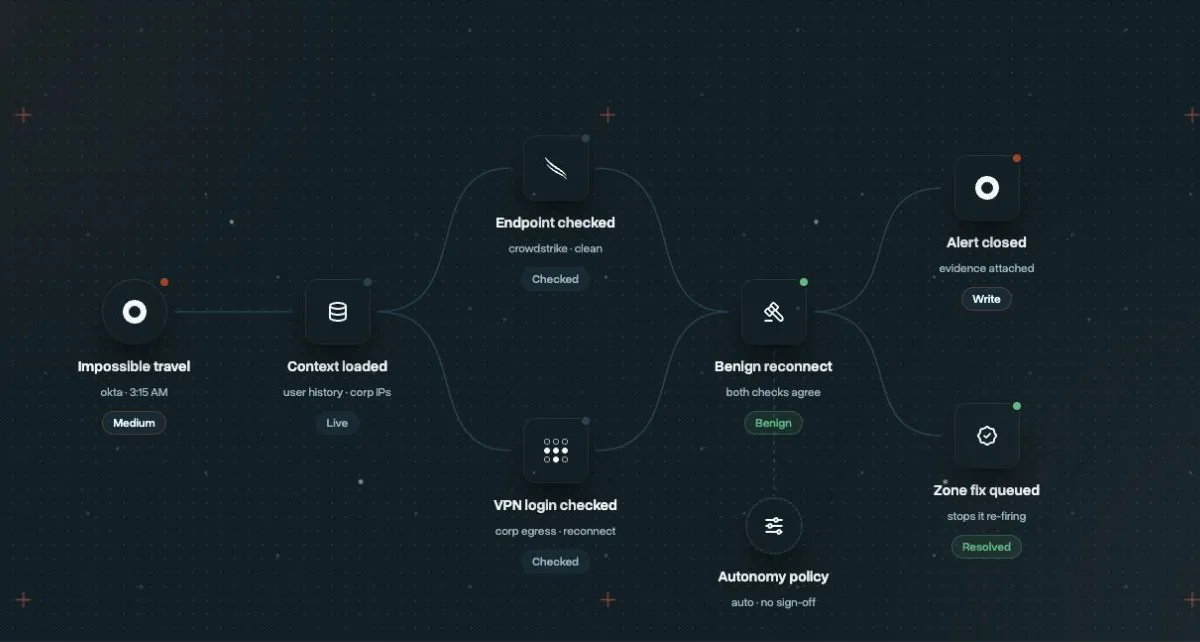
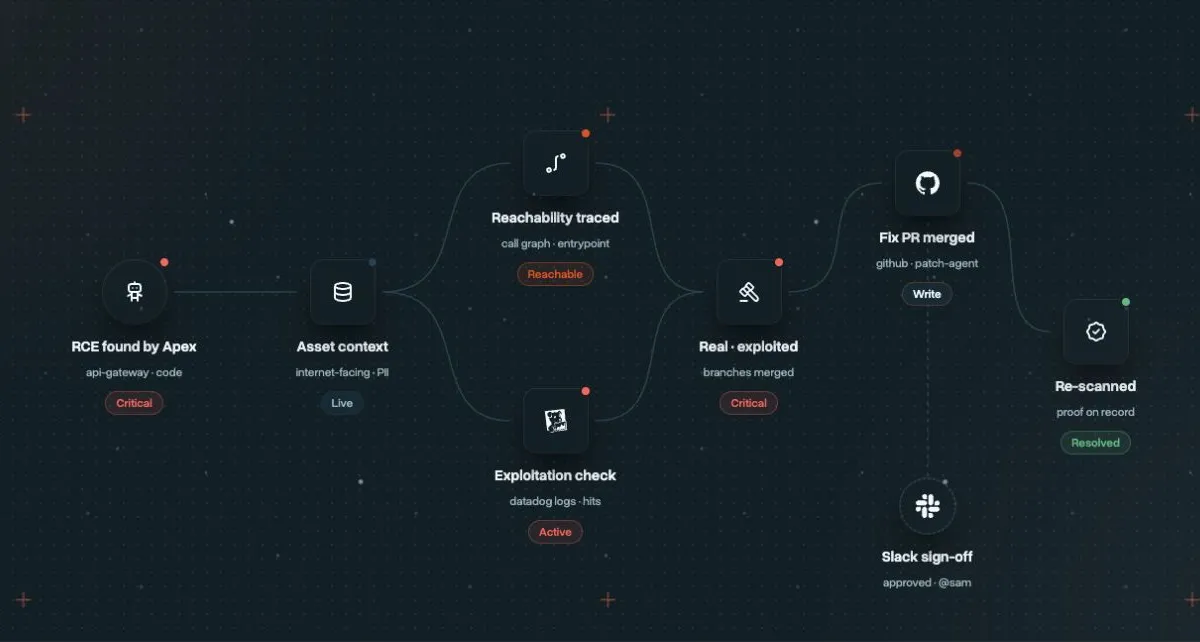
Apex feeds code vulnerabilities to agents in real time. Reachability and live exploitation are checked in parallel before anything reaches a human.
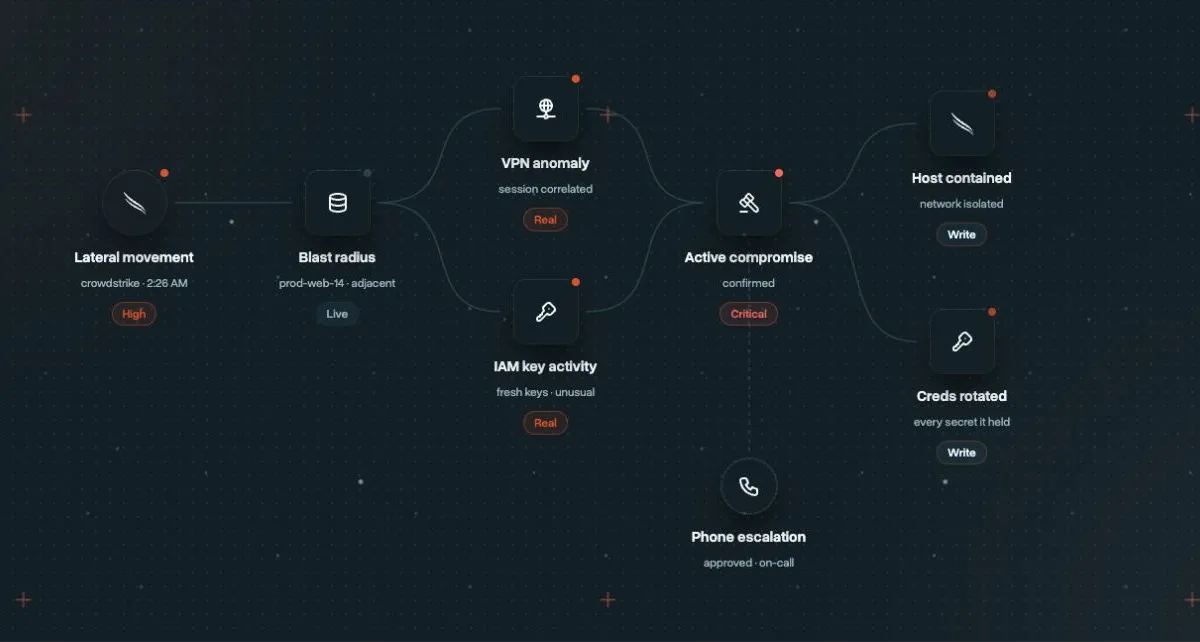
At 2 AM, three weak signals across endpoint, network, and identity became one strong one, and the response fit the domain.
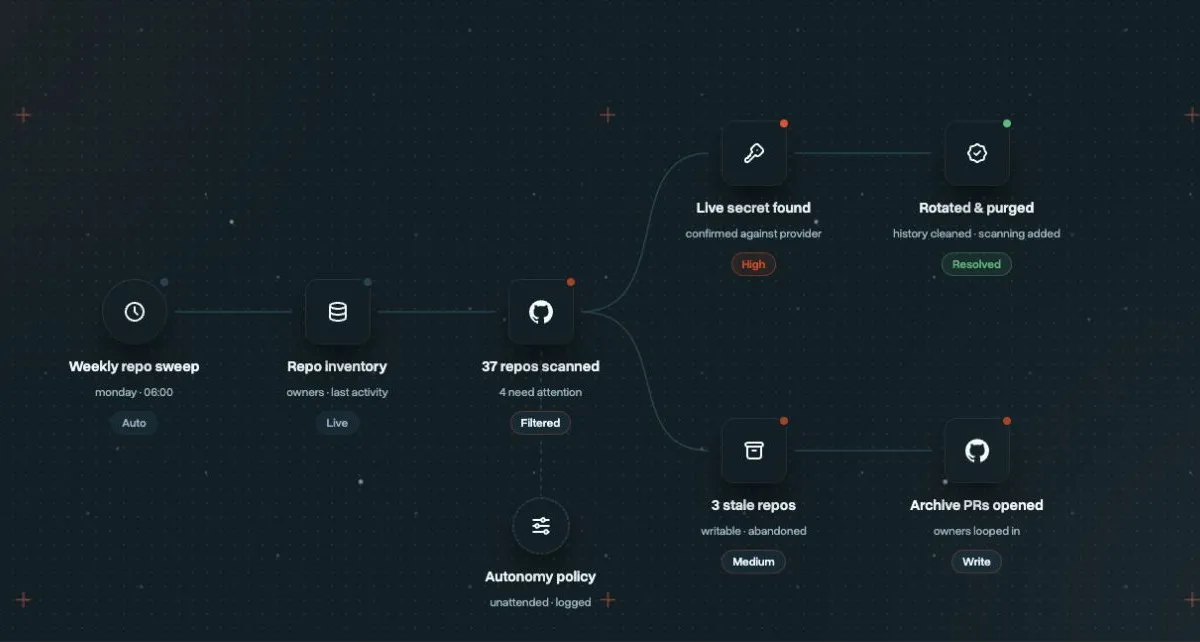
No alert is needed. This loop starts on a schedule, fans out across what it finds, and finishes in two minutes what would cost a person twenty.
An employee connected an unapproved AI assistant to company Drive. Identity and data checks ran in parallel, confirmed exposure, and removed access without waiting for a ticket.
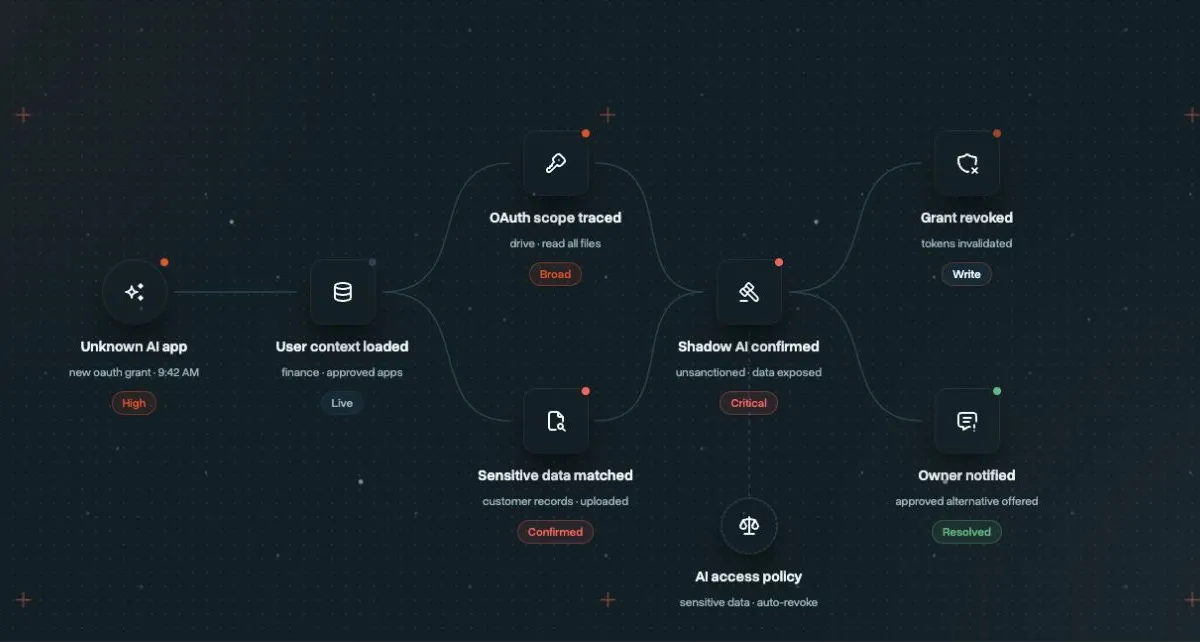
Every one of these is a job a security team already owns. Clarion runs them end to end, inside the permissions you set.
Clarion works the queue across your security tools and takes action on what it finds. Your team sets the response policy and decides which actions need approval.
Detects signs of takeover in Okta, Entra ID, and Google Workspace, investigates the activity, and cuts off compromised access.
Investigates cloud alerts, checks which data was accessed, and closes the exposure. It reads the access logs to separate possible exposure from recorded access.
Responds to your EDR detection, removes malicious files, and checks whether the user's credentials were used on other systems.
Checks your deployment platforms, DNS, and domains every day for unintended internet exposure, then investigates what it finds.
Collects SOC 2 evidence monthly, drafts security questionnaire answers from your current controls, and revokes access after review decisions.
01
Clarion combines exploitability, asset criticality, identity, and business context to close out false positives and benign issues, surfacing only the work that poses real risk.
02
Agents share one security memory layer, so nothing drops between tools or teams. One investigation spans Okta, CrowdStrike, cloud, and code, or whatever context is needed.
03
We don’t just hand you an issue for human intervention. We take the action that closes it, from merging a PR to containing a compromised host, and put the proof on record.
One issue, end to end
Every step reads and writes the shared security memory
The capabilities behind Clarion, from building agents to bringing in your team.
Every incoming alert is correlated and culled. Only the signal that is real, reachable, and consequential moves forward.
Tools, agents, and people read and write one live record instead of rebuilding context at every handoff.
Apex traces attacker-controlled input through the application and proves the route to real impact.
Observe, require approval, or act automatically. The policy changes by action, integration, and consequence.
Cantina carries the issue through remediation, retests the change, and records the evidence that it is closed.
Every decision, approval, and action becomes a chronological record that stays attributable.
Clarion is not where logs get stored. It is where the work gets finished. Most teams start it on top of what they already run, and some end up not needing the SIEM at all.
Teams with an established SIEM and a SOC process.
Clarion takes the SIEM's alerts plus scanner findings, triages them against shared memory, fixes, and verifies. The SIEM keeps detecting and storing.
“No rip and replace. Live the same day.”
Teams whose SIEM is mostly an alert generator.
Okta, CrowdStrike, AWS, GitHub, and cloud logs connect straight to Clarion, which runs detection, triage, and response on them. The SIEM keeps the long tail and the archive.
“Your best signals, handled end to end.”
Lean teams with no SIEM, or one they would rather retire.
Clarion does the SIEM's job: detection, triage, investigation, response, and fix. Long-term retention lives wherever it is cheapest for you.
“You do not need a SIEM to run a SOC.”
Traditional tools find work. Today's agentic point solutions suggest work. Cantina finishes it.
Clarion runs on the Cantina platform: one shared record of your environment, one set of autonomy policies, and one auditable trail across every product.
How the Cantina platform worksThink of it as a company brain built for security: your full technical operating environment in one place, everything that has already happened to it, and the business context that says what any of it is worth.
Agents read it before they act and write back what they learn. They also keep it current, so a service that changes owner or an SLA that tightens is reflected in the next decision rather than the next audit.
Connect the tools you already run. Signals arrive from cloud, identity, endpoint, and code, and actions go back out to the same places.
Read-only by default, write access scoped per action, skills versioned and human-readable, and every decision on the record.
Use the agents Cantina builds, adapt a proven one, or write your own. Each runs inside the autonomy policy you set for it.
Works with the stack you already run, including:
See every integrationNo rip-and-replace. Connect your stack and watch it work alongside your team.
Request a demoEverything else, ask us live, book a demo.
No. Clarion is where security work gets finished, not where logs get stored. If you run Splunk, Datadog, Panther, or Sentinel, Clarion works on top of it from day one. If you do not have a SIEM, or would rather not pay for one, Clarion connects to your sources directly and does the detection, triage, and response a SIEM would. Long-term log retention stays wherever it is cheapest for you.
Most teams connect their first tools and run their first agents the same day. Agent templates ship pre-built. You grant scoped credentials, set the autonomy level per action, and the memory layer starts building immediately.