

Signal intake
Every incoming alert is correlated and culled. Only the signal that is real, reachable, and consequential moves forward.
Clarion is a community-driven agentic security platform that closes every security loop, from first discovery to verified fix, so lean teams carry the coverage of a security organization ten times their size.
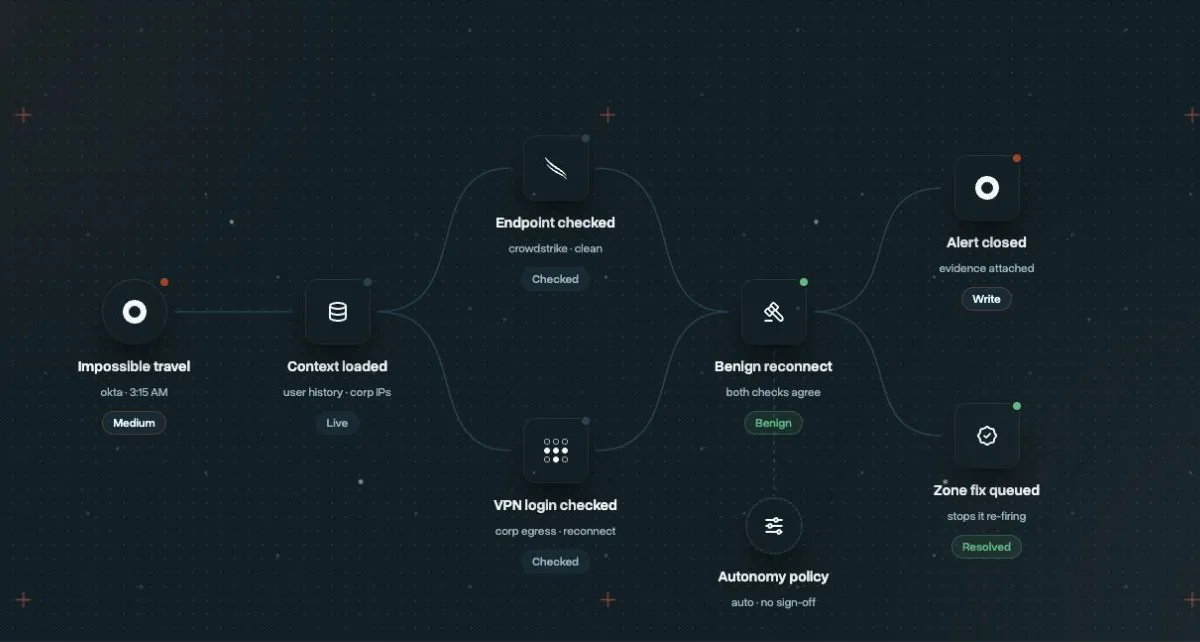
Over 90% of alerts are false positive or benign. Two checks run in parallel, the verdict merges them, and the loop closes with a fix, in minutes.
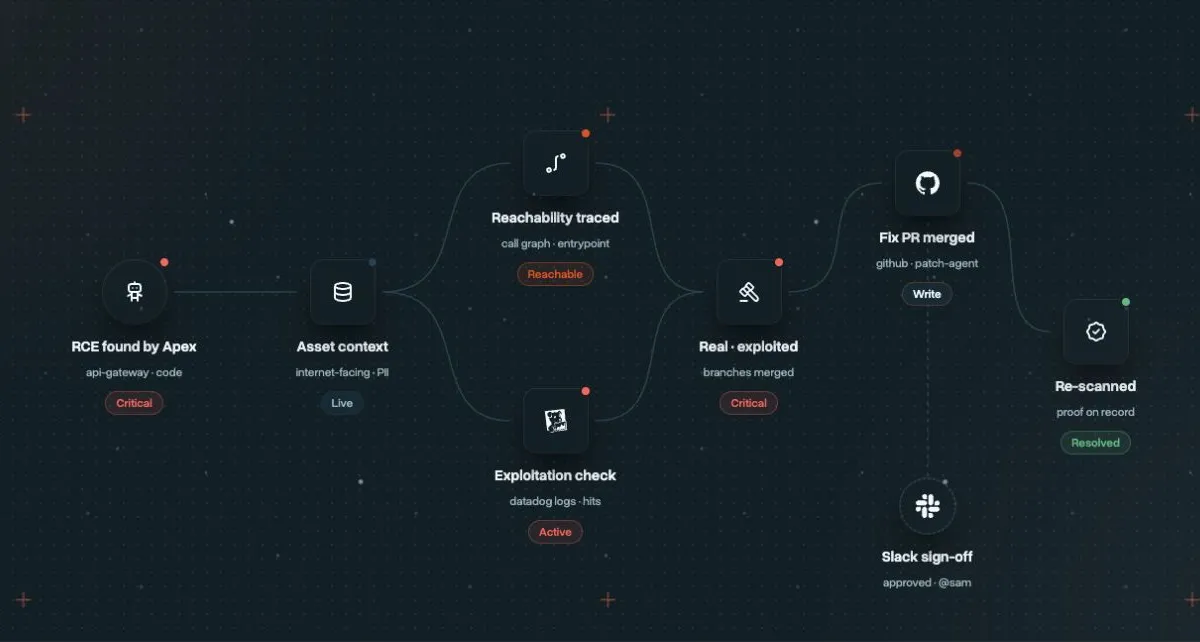
Apex feeds code vulnerabilities to agents in real time. Reachability and live exploitation are checked in parallel before anything reaches a human.
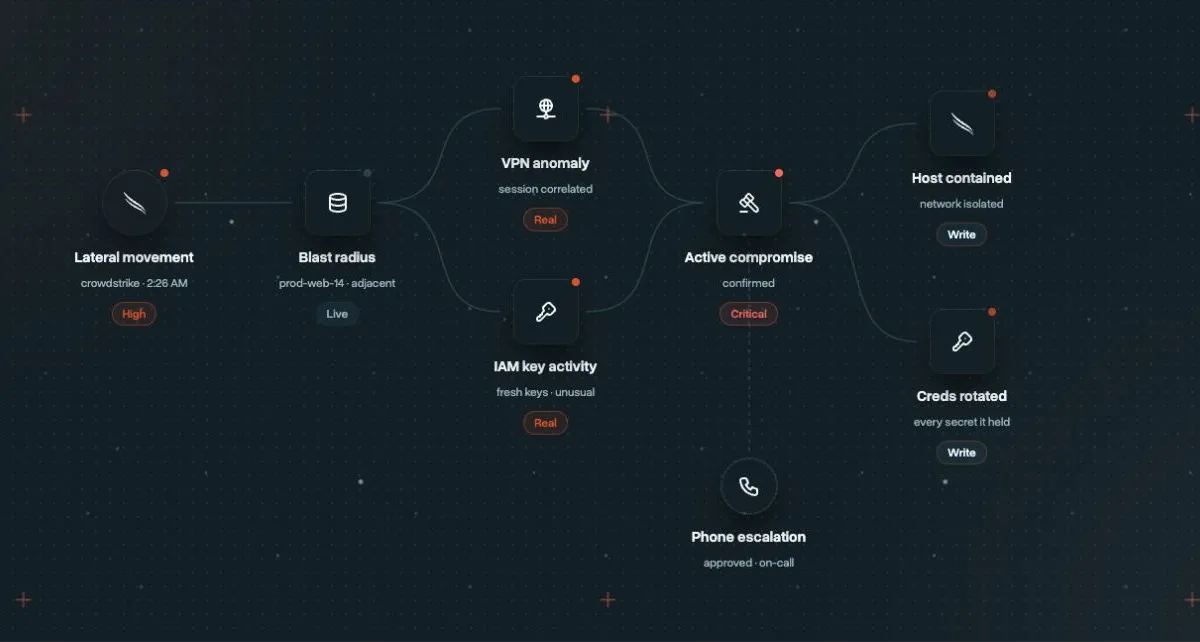
At 2 AM, three weak signals across endpoint, network, and identity became one strong one, and the response fit the domain.
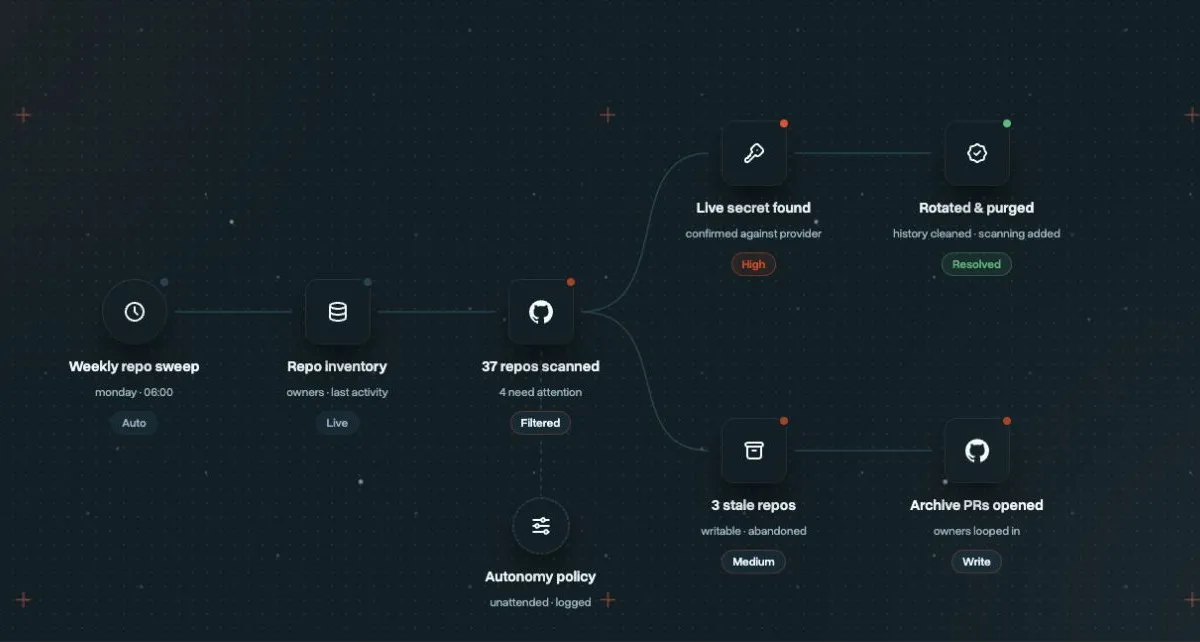
No alert is needed. This loop starts on a schedule, fans out across what it finds, and finishes in two minutes what would cost a person twenty.
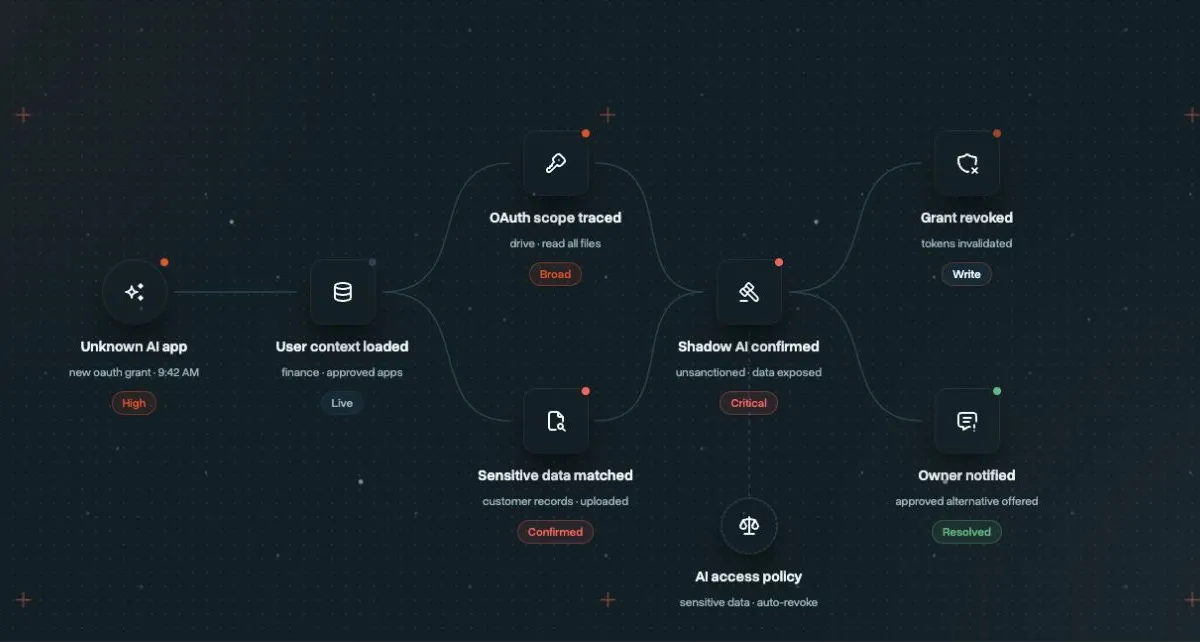
An employee connected an unapproved AI assistant to company Drive. Identity and data checks ran in parallel, confirmed exposure, and removed access without waiting for a ticket.
Keep your security leaders in control. Give every function a standing team of agents that shares context, coordinates across the program, and executes within the permissions you set.
Use agents built by Cantina, adapt proven agents, or create your own.

Security Engineer
Triage

Incident Response Lead
Detection & Response

Application Security
Vulnerability Management

IT Security
Identity & Access
Autonomous security lead
Offensive Security
Alex Triage Security Engineer
Priya Detection & Response Incident Response Lead
Sam Vulnerability Management Application Security
Dana Identity & Access IT Security
Autonomous security lead
01
Clarion combines exploitability, asset criticality, identity, and business context to close out false positives and benign issues, surfacing only the work that poses real risk.
02
Agents share one security memory layer, so nothing drops between tools or teams. One investigation spans Okta, CrowdStrike, cloud, and code, or whatever context is needed.
03
We don’t just hand you an issue for human intervention. We take the action that closes it, from merging a PR to containing a compromised host, and put the proof on record.
One issue, end to end
Every step reads and writes the shared security memory
The capabilities behind the platform, from building agents to bringing in your team.
Every incoming alert is correlated and culled. Only the signal that is real, reachable, and consequential moves forward.
Tools, agents, and people read and write one live record instead of rebuilding context at every handoff.
Apex traces attacker-controlled input through the application and proves the route to real impact.
Observe, require approval, or act automatically. The policy changes by action, integration, and consequence.
Cantina carries the issue through remediation, retests the change, and seals the loop with evidence.
Every decision, approval, and action becomes a chronological record that stays attributable.
Start with one workflow, one backlog, or an entire security function.
Traditional tools find work. Today's agentic point solutions suggest work. Cantina finishes it.
Write access demands a higher bar. Here's ours.
Independently audited controls, continuous monitoring, and regular third-party penetration tests. Reports available under NDA.
Your data never trains shared models. Agents are evaluated against your policies before they earn autonomy in your environment.
Scoped, revocable credentials per integration, single-tenant memory, and a complete audit trail for every action an agent takes.
Agentic security in practice
Explore the agents Clarion can direct and the practical guidance behind permissions, approvals, identity, and verified action.
See the prebuilt agents, adaptation paths, permissions, approvals, and audit controls inside Clarion.
Read moreA practical security framework for permissions, approvals, identity, and tool access in agentic systems.
Read moreA practical model for permission limits, verification checkpoints, and monitoring agent behavior.
Read moreField reports, checklists, and technical guidance for security teams adopting agents responsibly.
Read moreNo rip-and-replace. Connect your stack and watch it work alongside your team.
Request a demoEverything else, ask us live, book a demo.
Most teams connect their first tools and run their first agents the same day. Agent templates ship pre-built. You grant scoped credentials, set the autonomy level per action, and the memory layer starts building immediately.
Only for the actions you delegate. Every integration starts read-only. You grant write scopes for specific actions such as merging a PR, containing a host, or revoking a grant, and you can require human approval for any of them. Agents that only triage never need write access at all.
It pauses the run and reaches a person over Slack, SMS, or a phone call with the full context and the proposed action. Once approved, it continues exactly where it stopped. Nothing irreversible happens without the policy you set allowing it.
Yes. An agent combines skills for triage, remediation, and human escalation with access to your connected tools. Start from one of the dozens of community templates or compose your own, then schedule it for recurring work like weekly stale-repo sweeps.